Golrang Industrial Group had a modern internal HR app that nobody used. Two gamification campaigns, eleven days each, and a funnel analysis in between — that's what changed the habit.
Golrang Industrial Group is one of Iran's largest FMCG conglomerates — over 40,000 employees across 113 subsidiary companies, spread across every province of the country.
They'd built Golrang Man ("My Golrang") — a modern internal app to centralize HR operations: leave requests, payroll, administrative tasks. The problem wasn't the product. The problem was that employees kept using older systems and finding reasons not to install something new.
"You can't mandate behavioral change — but you can make the new behavior irresistible."
The team's solution: a mini-game campaign timed to the company's 21st anniversary. My job was to make sure it actually worked — as a product experience, as an engagement loop, and as a driver of sustained app adoption.
Rather than promoting Golrang Man through top-down communications, we embedded the game entry point directly inside the app. Authentication flowed through Golrang Man — to play, you had to be logged in.
This turned a passive install into an active session. A game became a reason to open the app. And a well-designed game became a reason to come back.
The game banner lived in the app's home screen — making it impossible to miss for anyone who opened Golrang Man. I redesigned the in-app entry flow after a heuristic evaluation identified that the original placement had low visibility and an unclear CTA hierarchy.
Two leaderboards ran in parallel: a personal ranking showing individual score and position, and a company-level leaderboard aggregating all employees per subsidiary. Teams competed against each other — creating inter-company rivalry that drove internal word-of-mouth across the group.
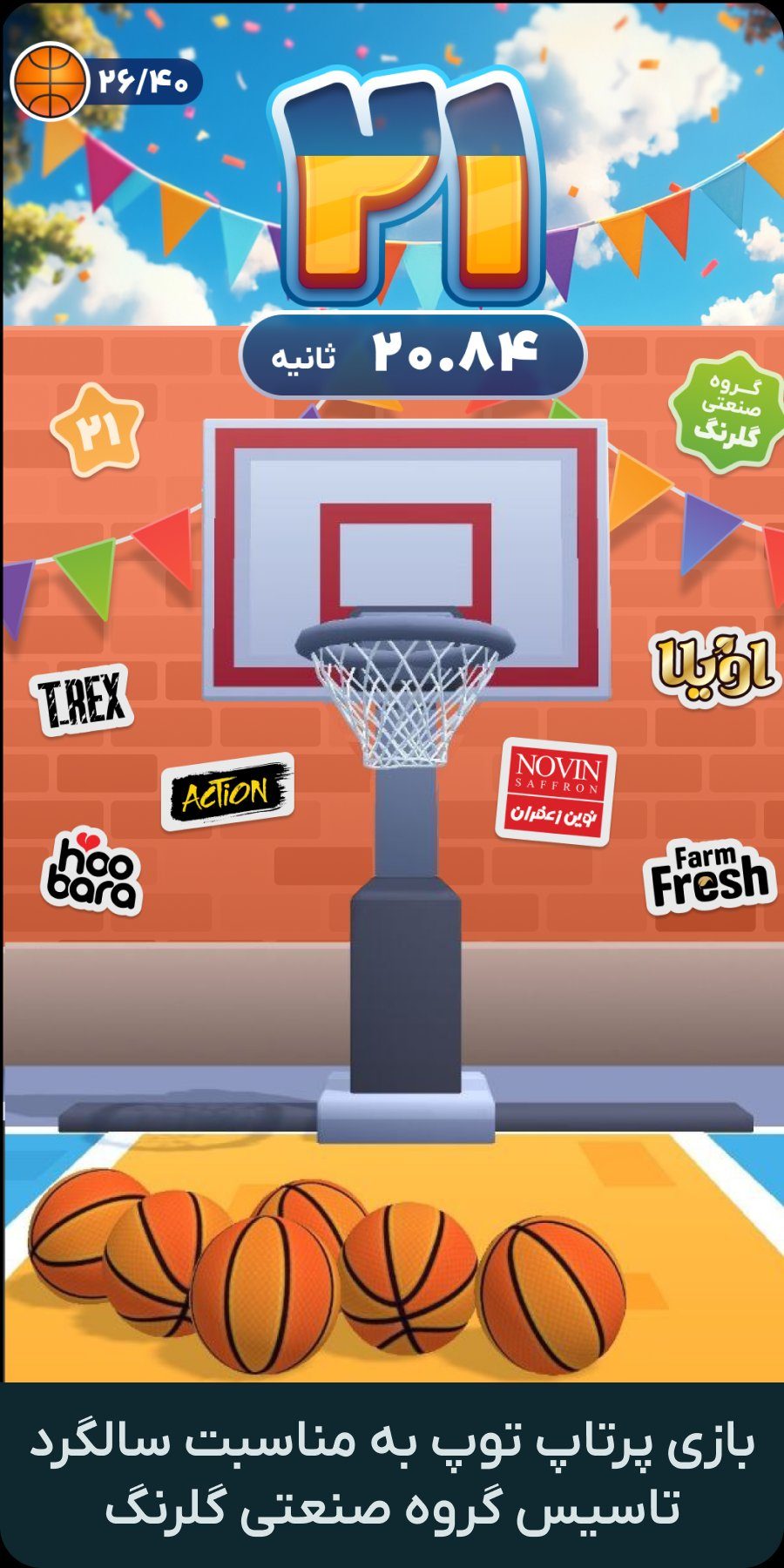
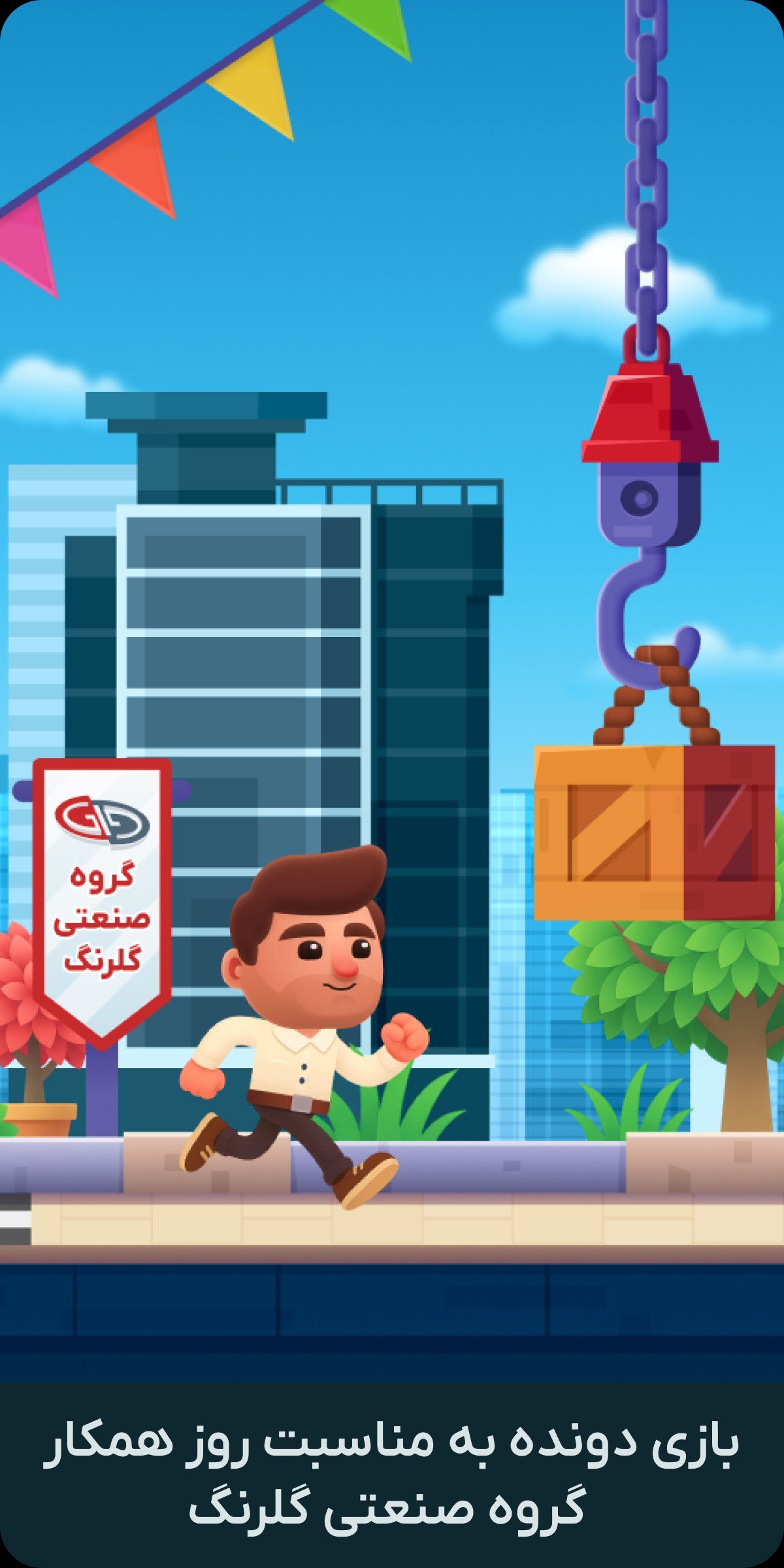
I applied the Octalysis Framework to structure the campaign's engagement mechanics — mapping each feature to a specific motivational driver rather than adding game elements intuitively.
The first campaign ran across Golrang's entire network — employees from every subsidiary, every province. The numbers validated the strategic bet: making the game the reason to open Golrang Man worked.
After Campaign 1 closed, I analyzed the behavioral data before Campaign 2 was planned. The most important finding wasn't in the success metrics — it was in the drop-off.
These weren't disengaged employees. They'd opened the app, navigated to the game banner, and stopped. Something in the flow dropped them before they ever played a round. This wasn't a motivation problem — it was a product problem. And it told me exactly what to build for Campaign 2.
I identified two distinct user segments in the dropout cohort, and proposed a specific feature for each:
For users with low competitive drive: a low-effort re-engagement mechanic. Enter a daily draw just by opening the app. No skill required, no pressure to compete. Just a reason to return — and a chance at meaningful prizes.
For the broader inactive cohort: a referral mechanism letting employees invite colleagues directly from inside the game. Social games spread through social graphs. If Campaign 1 reached 10,394 players, the ceiling was the entire workforce — but only if word spread peer-to-peer.
Campaign 2 launched for Worker's Day — same structure, same 11-day window, but with the entry flow redesigned and both new features in place. The data-driven iteration paid off across every metric.
The Daily Lottery reactivated approximately 1,600 of the ~3,500 inactive users identified in the funnel analysis — a ~46% reactivation rate on a cohort that had already dropped off once. Invite Friends generated 2,228 successful referrals, validating the peer-to-peer spread hypothesis.
This project wasn't about designing a game. It was about solving an adoption problem with an unusual constraint: you can't force people to change behavior, but you can make the new behavior worth doing.