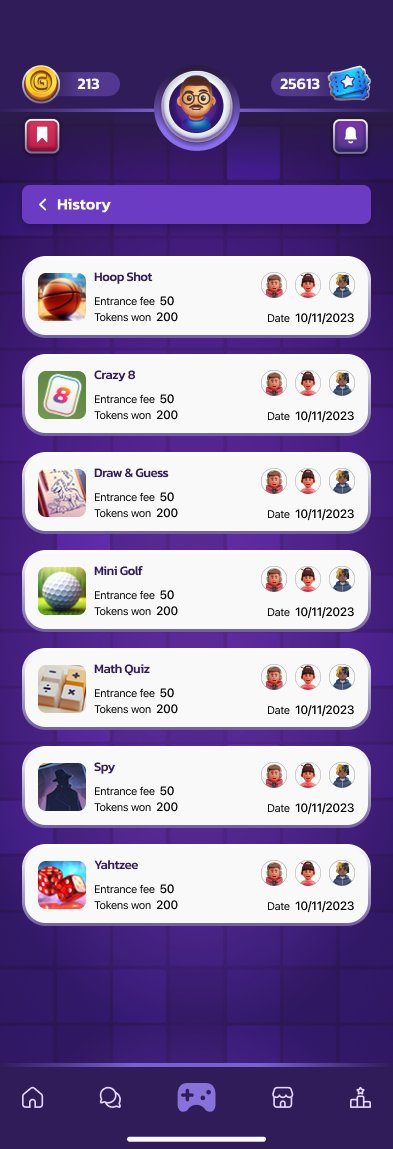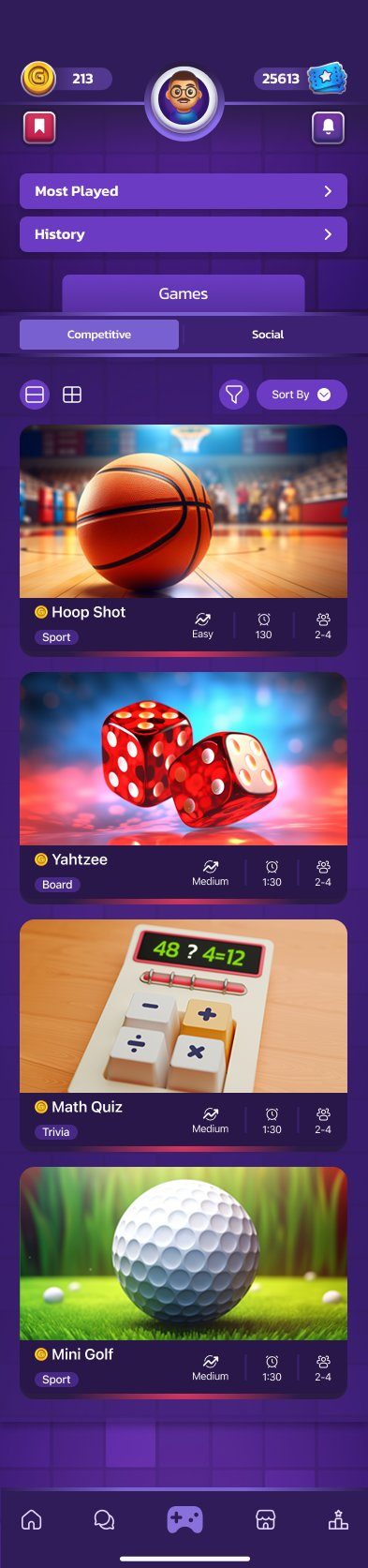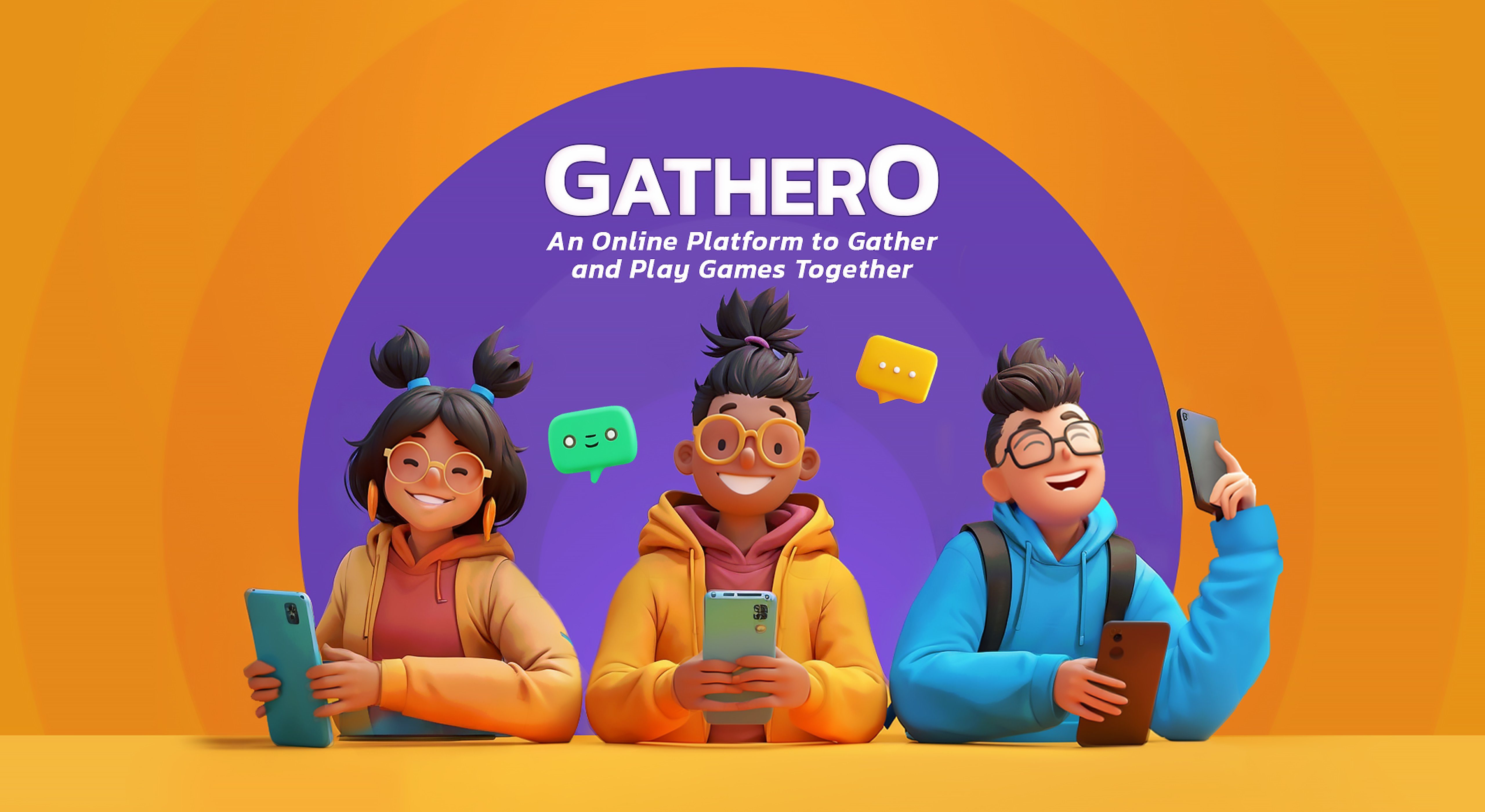
A research-driven platform pivot that transformed a crypto gambling concept into a social gaming platform where friends compete together.
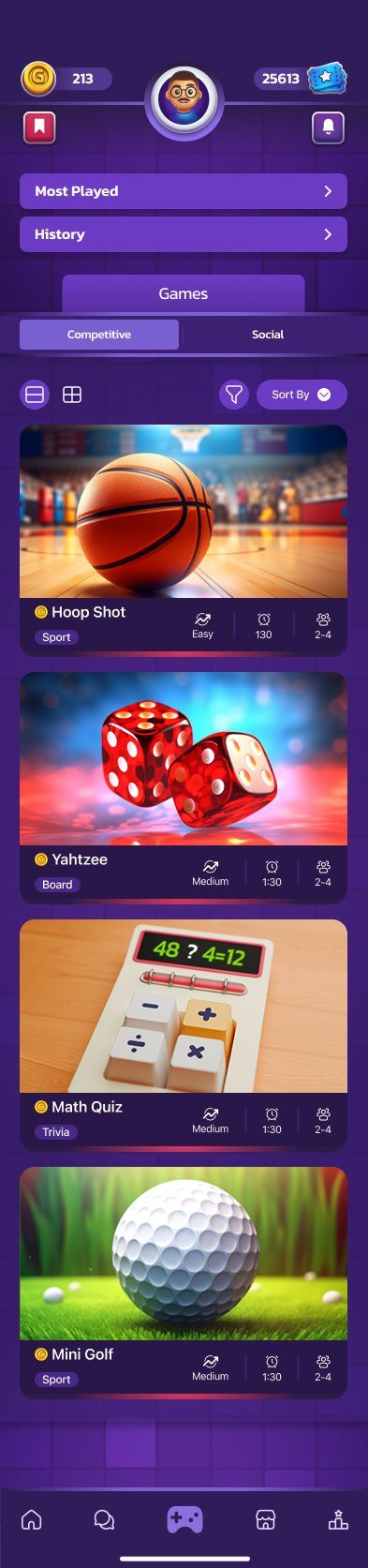
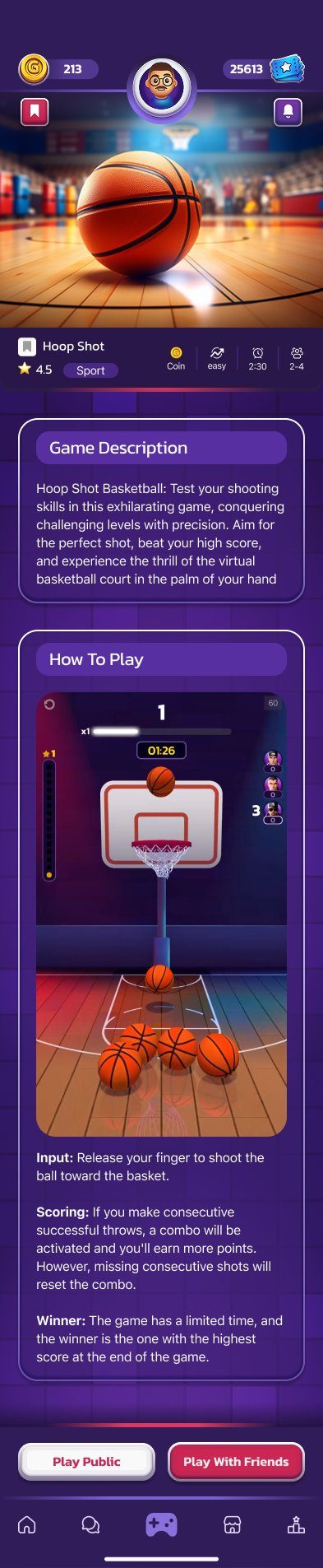


The original concept — Rexinity — was a competitive gaming platform where players wagered in-platform tokens on casual mini-games, with a roadmap toward NFT conversion and a crypto sub-platform. The founding team believed casual gamers would enjoy light gambling mechanics.
My first question was whether the target user actually wanted to gamble on unfamiliar mini-games. Before touching Figma, I needed to find out.
Phase 1 was a broad screener survey across 36 respondents, combining the Bartle Player Type Test with self-reported gambling and gaming habits. A clear pattern emerged: people who enjoy gambling prefer familiar games — poker, backgammon, sports betting — not unknown mini-games.
Phase 2 was a live simulation test. I invited 8 participants to the office and ran a behavioral study using real poker chips as stand-ins for in-platform currency, playing on Plato (a comparable mini-game platform). I tracked rounds played, willingness to increase stakes, and behavior when chips ran out.
"I want to play these games with my friends" — repeated by 7 of 8 participants, 26 times across affinity mapping
Participants were happy to compete, but not against strangers for real stakes. The insight was simple and powerful: the opportunity wasn't gambling — it was social competitive gaming.
I presented the findings to the founding team with a clear recommendation: the gambling mechanic was misaligned with actual user motivation. The real opportunity was giving groups of friends a platform to play casual mini-games together — online or at a physical gathering.
The team accepted the pivot. This was not just a naming change — it reframed the entire product vision, monetization model, and emotional design language from the ground up.
Before opening Figma, I used Plutchik's Wheel of Emotions and the Valence-Arousal model to map the exact emotional states GatherO should evoke across two distinct contexts.
Joy + Trust + Anticipation = Excitement — the platform's core value proposition
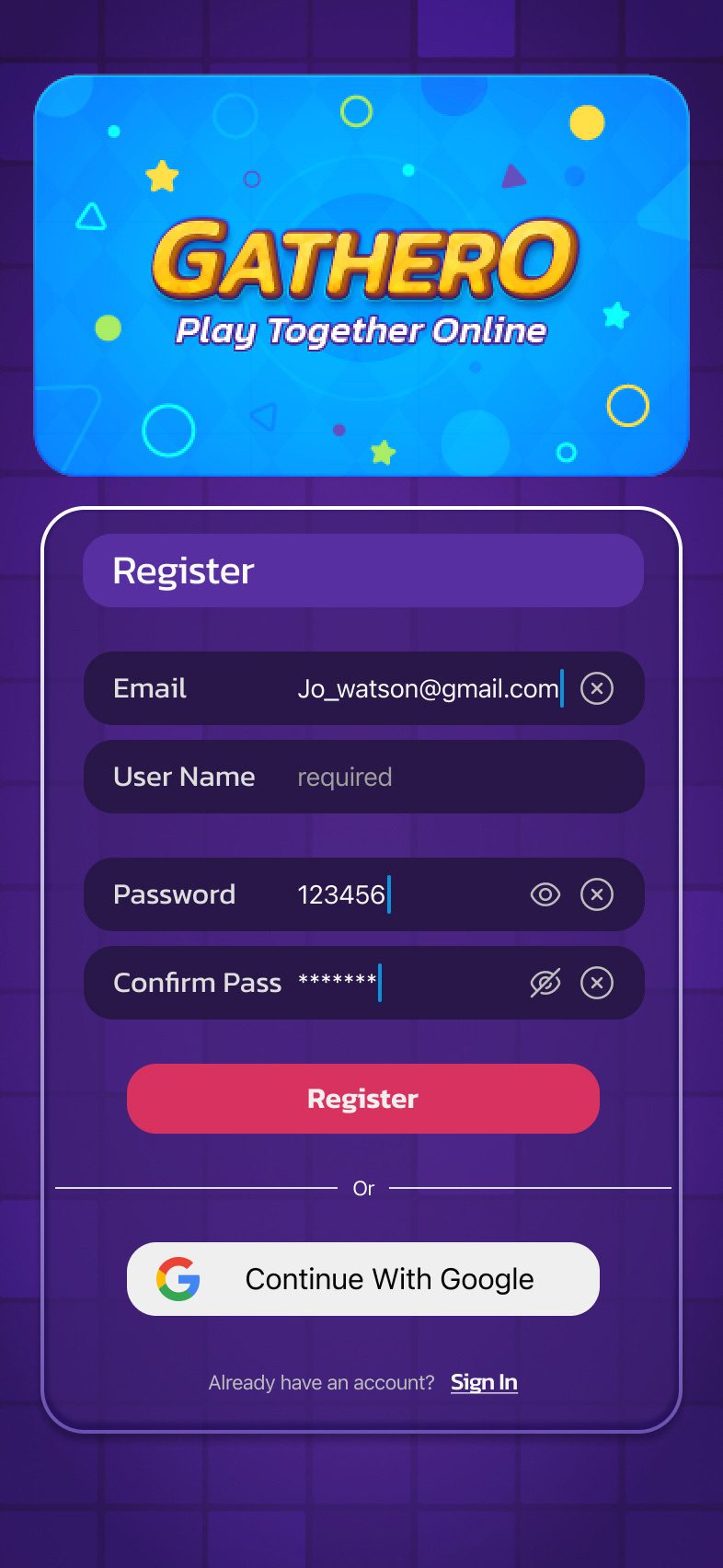
I built GatherO's full design system from zero — every token, component, and pattern created with developer handoff in mind.